
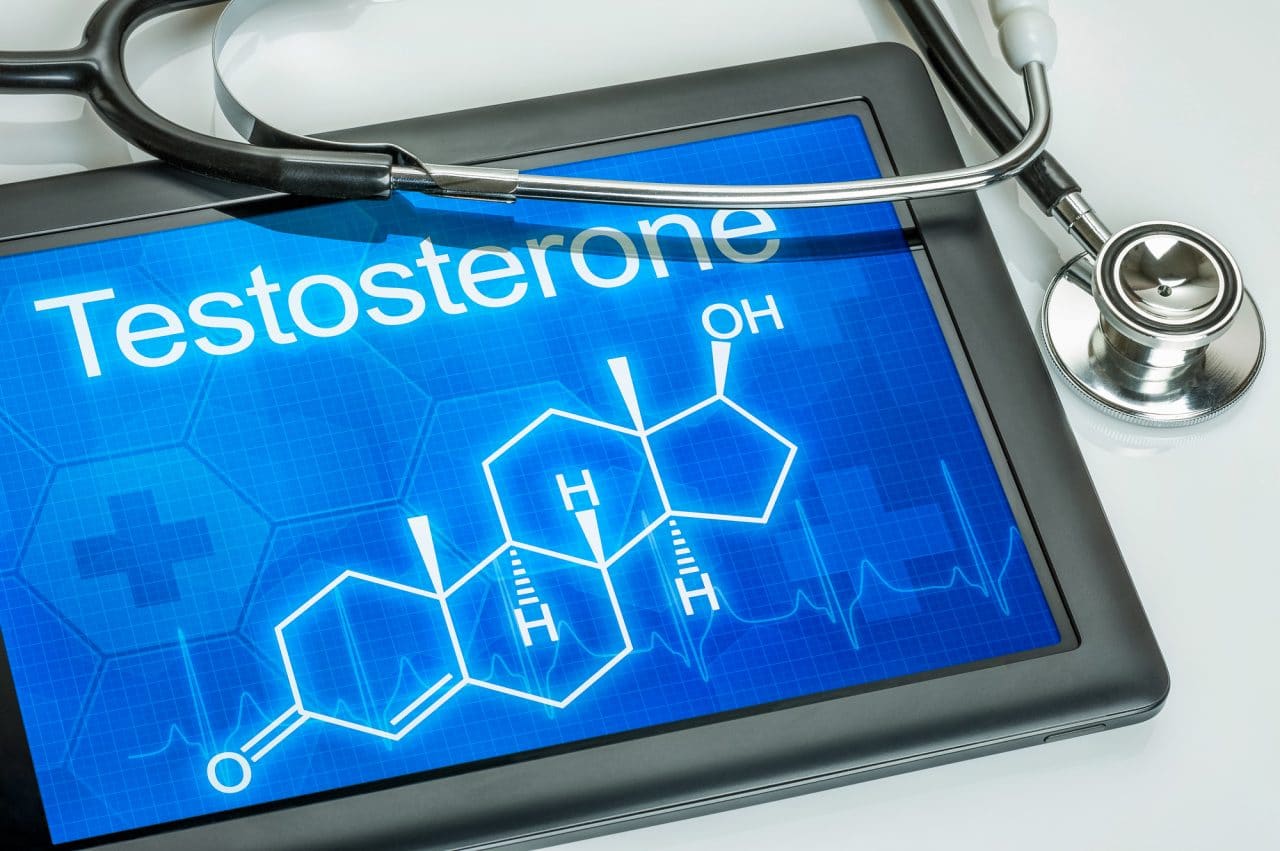
Testosterone Replacement Therapy for Men in Oklahoma: Symptoms, Optimal Levels, and What Treatment Involves
By Dr. Brian Lamkin · The Lamkin Clinic, Edmond, Oklahoma
Testosterone replacement therapy restores testosterone to an optimal physiologic range in men whose levels have declined enough to cause symptoms such as persistent fatigue, reduced libido, loss of muscle, added abdominal weight, and slower thinking. A useful evaluation weighs the full hormonal and metabolic picture alongside how a man actually feels, instead of reading one number against a wide reference range.
What Low Testosterone Looks Like in Practice
Most men who come in for a hormone evaluation already sense that something has shifted. Sleep no longer restores their energy. Drive has faded at work and at home. Weight settles around the midsection despite steady training and reasonable eating, and hard-earned muscle feels harder to hold. Some describe a mental fog that makes familiar work take longer than it used to.
Many have already raised it with a primary care physician, had a single testosterone drawn, and been told the result was normal. They left with a number and no plan.
The pattern is common, and it responds well to a thorough diagnostic approach. In the Hypogonadism in Males study, roughly 38.7 percent of men aged 45 and older presenting to primary care carried total testosterone below 300 ng/dL, the conventional threshold for low. A large share of those men were never evaluated in depth or offered a protocol built around them as individuals. Evaluation at The Lamkin Clinic, part of our broader approach to men’s health, starts with that full picture.
What Are the Symptoms of Low Testosterone in Men?
Testosterone influences far more than sexual function. It supports energy production, body composition, cognition, bone density, cardiovascular health, and mood, so a meaningful decline tends to appear across several systems at once.
Common symptoms of low testosterone in men include:
- Persistent fatigue that better sleep does not resolve
- Reduced libido and diminished sexual performance
- Difficulty building or holding muscle despite consistent strength training
- Added body fat, particularly visceral fat around the abdomen
- Mental fog, weaker concentration, and slower processing
- Irritability, low motivation, or a flatter mood
- Disrupted sleep, including trouble falling or staying asleep
- Declining bone density, which often goes unnoticed until a fracture
A recent narrative review of testosterone therapy in men reported consistent improvement in sexual function, lean mass, fat reduction, insulin sensitivity, bone density, and mood when treatment is appropriately indicated and monitored. When body composition is a primary concern, we often pair hormone work with objective tracking through a DEXA body composition scan so muscle and fat changes are measured rather than guessed at.
There is also a metabolic dimension worth naming. Low testosterone and insulin resistance share a bidirectional relationship: hypogonadal men are roughly twice as insulin resistant as men with normal levels, and low testosterone predicts the later development of type 2 diabetes. Testosterone supports glucose uptake through pathways that include GLUT4 expression and mitochondrial function, which is one reason untreated deficiency carries consequences well beyond how a man feels on a given day. Readers tracking the metabolic side of this can see where these markers fall on the timeline of decline in our insulin resistance spectrum framework, and men carrying excess visceral fat often benefit from addressing weight alongside hormones through medical weight loss.
Why a “Normal” Testosterone Result Can Still Come With Symptoms
The standard reference range for total testosterone in adult men runs from about 300 to 1,000 ng/dL. That is a 700-point spread. A man at 305 ng/dL sits inside the range on paper while feeling exhausted, carrying little sexual interest, and struggling to hold muscle regardless of how he trains.
Reference ranges describe population averages, not optimal function. A healthy, active man in his early thirties often carries total testosterone in the 600 to 900 ng/dL range. A man of 55 at 310 ng/dL is not biologically equivalent to that thirty-year-old. He is statistically ordinary for a population that has grown more sedentary and more metabolically stressed than it once was.
Evaluation at The Lamkin Clinic reads testosterone in context: your symptoms, your age, and your complete hormonal profile. Free testosterone and SHBG carry as much weight as total testosterone. A man can show a total testosterone of 600 ng/dL while high sex hormone-binding globulin leaves his free, biologically active testosterone low enough to produce classic deficiency symptoms.
Which Labs Belong in a Complete Testosterone Evaluation?
A thorough evaluation looks past the single value most men arrive with. The panel we order gives a protocol something real to stand on:
- Total testosterone, drawn fasting in the morning when levels peak
- Free testosterone, the unbound fraction available to your tissues
- SHBG, which determines how much testosterone actually reaches your cells
- Estradiol, since elevated estrogen in men can blunt testosterone’s effects
- LH and FSH, which separate primary from secondary hypogonadism and shape strategy
- PSA, a prostate baseline set before any protocol begins
- Complete metabolic panel and CBC, a metabolic and blood-count baseline that includes hematocrit
- Thyroid panel, since thyroid dysfunction mimics low testosterone and must be ruled out
- IGF-1, when growth hormone status is part of the picture
TRT Delivery Methods: Injections, Pellets, and Topical Testosterone
Once evaluation confirms that testosterone optimization is appropriate, several delivery options exist. Each carries its own advantages and trade-offs, and the right one depends on a man’s physiology, schedule, and preferences.
Testosterone injections. Weekly or twice-weekly intramuscular or subcutaneous injections produce reliable, measurable levels and allow precise dose adjustment. Many men prefer the method for its straightforwardness, its cost, and the clear data points it gives for monitoring. The trade-off is some fluctuation between doses, which a few men notice as variation in energy. Injectable testosterone also tends to raise hematocrit more than other formulations, which is one reason regular bloodwork is built into the protocol.
Testosterone pellets. Pellets are small, rice-sized inserts placed under the skin, usually near the hip, during a brief in-office procedure under local anesthetic. They release testosterone gradually across three to six months, holding levels steady without frequent dosing. In a long-term comparison of formulations, pellets produced a lower rate of erythrocytosis than injections. The main consideration is timing: once pellets are placed, dose changes wait until the next insertion.
Topical gels and creams. Applied daily to the skin, topicals absorb transdermally and deliver a consistent daily dose. They call for care around skin contact with partners or children, and absorption varies from one man to the next. For some men they fit well; for others, variable absorption makes them a second option.
We review these options with each patient and select the method that fits both the clinical picture and the life the man is living. For some men, peptide therapy complements a testosterone protocol by supporting recovery, body composition, and growth hormone signaling.
What a Functional Medicine Approach to TRT Involves
Restoring testosterone is one part of the work. The larger question is why it declined, and answering that tends to produce results that hold.
Common contributors include chronic sleep debt, metabolic syndrome and insulin resistance, elevated cortisol from sustained stress, environmental estrogen exposure, and nutritional gaps. Addressing these drivers alongside a testosterone protocol supports steadier, more durable outcomes than testosterone taken on its own. This is the logic behind our full bioidentical hormone replacement approach, which treats testosterone as one system within a connected hormonal picture.
Monitoring is continuous. We follow hematocrit, PSA trends, and estradiol balance over time, and we adjust protocols to how a man actually responds rather than to a fixed template. Testosterone that aromatizes to excess estradiol, or that pushes hematocrit too high, calls for a change in dose or method, and catching that early is part of the follow-through.
Dr. Brian Lamkin, has directed The Lamkin Clinic in Edmond since 2007, practicing functional and regenerative medicine with close attention to the metabolic and hormonal systems that shape how a man ages.
Who Is a Candidate for Testosterone Replacement Therapy?
TRT suits men who show low testosterone on lab work, symptoms consistent with hypogonadism, and no contraindications such as untreated prostate cancer or polycythemia. Age alone disqualifies no one. Men in their thirties can present with secondary hypogonadism driven by metabolic stress or pituitary dysfunction, and they warrant the same thorough workup as older men.
Men whose testosterone sits in the low-normal range and who want to protect performance, body composition, and long-term metabolic health benefit from a full evaluation to understand what is driving the decline before starting exogenous testosterone. For men who intend to preserve fertility, that evaluation matters even more, since standard testosterone therapy can suppress the LH and FSH signals that maintain natural production. Fertility-sparing protocols exist and are worth discussing before treatment begins.
If you live in Edmond, Oklahoma City, or the surrounding area and have been told your testosterone is normal while still living with fatigue, added weight, mental fog, or reduced drive, we would review your labs and talk through what optimal looks like for you.
Frequently Asked Questions
At what testosterone level should a man consider treatment?
No single cutoff fits every man. Total testosterone below roughly 300 ng/dL alongside matching symptoms is a common threshold, though free testosterone, SHBG, and how a man feels often carry more weight than the total alone. Two morning measurements are typically used to confirm a low result before treatment begins.
How long does testosterone therapy take to work?
Timelines vary by symptom. Libido and energy often shift within the first several weeks, while changes in body composition, muscle, and mood develop over three to six months of a well-monitored protocol.
Is testosterone replacement therapy safe long term?
With appropriate screening and ongoing monitoring of hematocrit, PSA, and estradiol, testosterone therapy has a well-characterized safety profile. That monitoring is what keeps it safe, which is why regular bloodwork is part of the protocol rather than an occasional check.
Will TRT affect fertility?
Standard testosterone therapy can lower sperm production by suppressing the LH and FSH signals that drive it. Men who want to preserve fertility have alternative or adjunctive options, which are worth discussing before starting.
Does The Lamkin Clinic take insurance for testosterone therapy?
The clinic runs on a cash-based model, which allows for longer visits and individualized protocols. Testing and treatment costs are discussed openly before you begin.
Testosterone Therapy in Edmond and Oklahoma City
A single lab value is a starting point, not a verdict. Evaluation at The Lamkin Clinic weighs your symptoms, your history, your goals, and your complete data, then builds a protocol around them.
Request a men’s hormone consultation at lamkinclinic.com/contact.
The Lamkin Clinic · Edmond, Oklahoma · Cash-based, individualized functional and regenerative medicine
Related Reading
Hormone health: Men’s Health · Bioidentical Hormone Replacement · Peptide Therapies
Lab markers: Total Testosterone · Free Testosterone · IGF-1
Metabolic and body composition: Insulin Resistance Spectrum · Medical Weight Loss · DEXA Body Composition Scan
References
- Mulligan T, Frick MF, Zuraw QC, Stemhagen A, McWhirter C. Prevalence of hypogonadism in males aged at least 45 years: the HIM study. Int J Clin Pract. 2006;60(7):762–769. (PMC1569444)
- Testosterone therapy in men in their 40s: a narrative review of indications, outcomes, and mid-term safety. (PMC12538667)
- Testosterone level and risk of type 2 diabetes in men: a systematic review and meta-analysis. (PMC5793809)
- Testosterone and insulin resistance in men: evidence for a complex bi-directional relationship. (PMC12323448)
- Comparison of the effects of testosterone gels, injections, and pellets on serum hormones, erythrocytosis, lipids, and prostate-specific antigen. Sex Med. 2015. (PubMed 26468380)
This article is for general educational purposes and does not constitute individual medical advice. Testosterone therapy requires evaluation and monitoring by a qualified physician. Consult a clinician about your own labs and symptoms before beginning any treatment.