
Emsella for Pelvic Floor Strengthening and Bladder Control: What You Need to Know
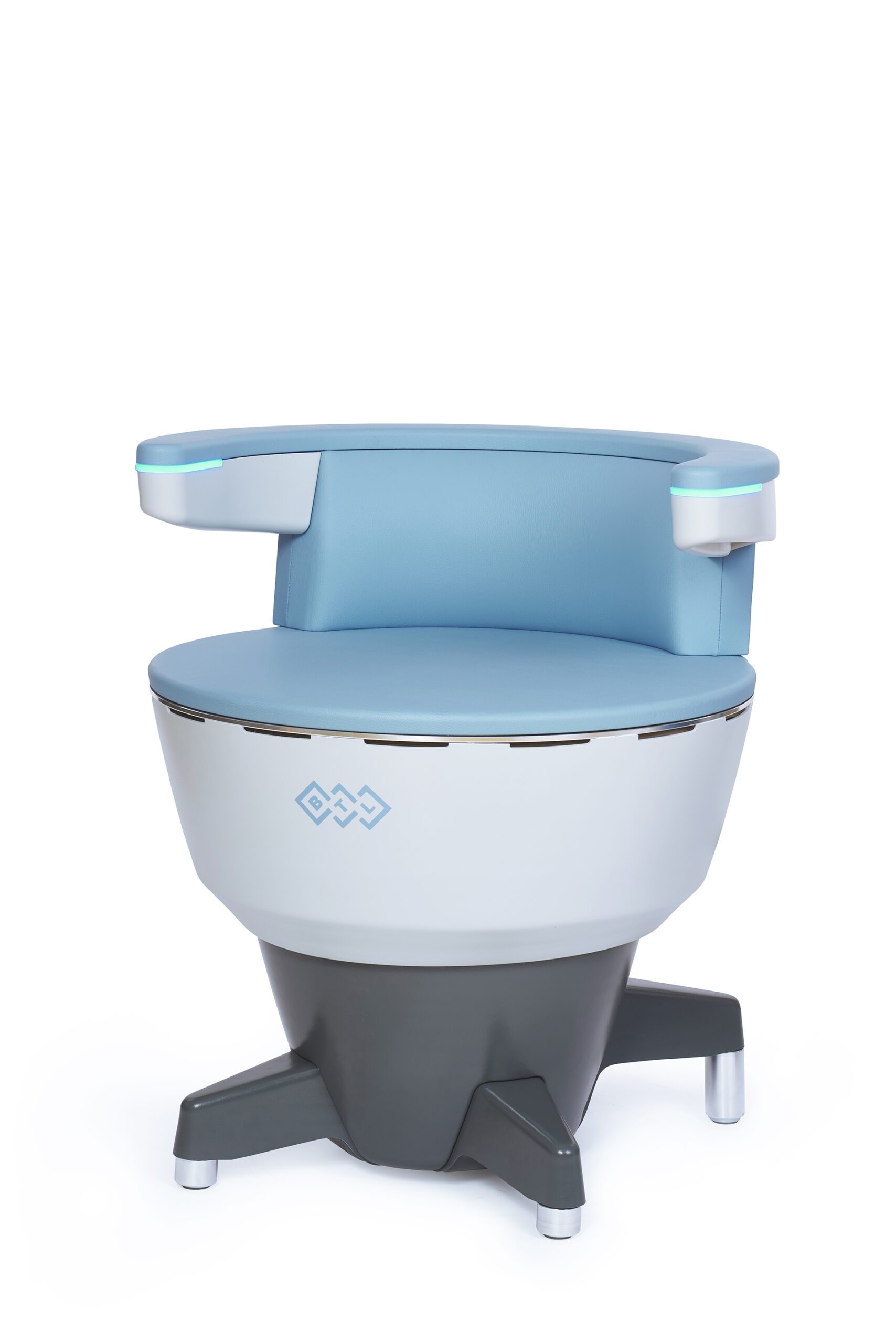
Emsella is an FDA-cleared chair that uses High-Intensity Focused Electromagnetic (HIFEM) technology to contract the pelvic floor muscles at an intensity no voluntary exercise can reach. You sit fully clothed for 28 minutes. There is no surgery, no anesthesia, and no downtime. The Lamkin Clinic in Edmond is Oklahoma’s only BTL Academic Center.
What Is Emsella?
Emsella is a BTL-manufactured, FDA-cleared medical device that treats urinary incontinence and pelvic floor dysfunction in women and men. It looks like a standard chair. You sit on it, fully clothed, and the device does the work.
The chair delivers a focused electromagnetic field into the pelvic region. That field stimulates the motor neurons controlling the pelvic floor muscles, triggering what researchers describe as supramaximal contractions: contractions at an intensity and frequency the nervous system cannot produce voluntarily, no matter how diligently someone performs Kegel exercises at home.
Pelvic floor weakness is far more common than most people assume. The Fourth International Consultation on Incontinence found that most studies report some degree of urinary incontinence in 25 to 45 percent of women, with 7 to 37 percent of women aged 20 to 39 reporting symptoms and daily incontinence reported by 9 to 39 percent of women over 60. (Buckley and Lapitan, International Consultation on Incontinence) Pregnancy, childbirth, diabetes, and increased body mass index all raise risk.
Contributing factors include childbirth, surgical intervention, hormonal change, and the progressive loss of muscle mass and neuromuscular coordination that accompanies aging. For years the standard non-surgical recommendation was pelvic floor physical therapy or home Kegel exercises. Emsella adds a mechanism those approaches cannot reach.
How Does HIFEM Technology Work?
HIFEM stands for High-Intensity Focused Electromagnetic technology. The device generates an alternating magnetic field focused on the pelvic floor musculature. That field depolarizes the membranes of peripheral motor neurons in the pelvic region, which triggers sustained, rapid muscle contraction.
The distinction between HIFEM and other pelvic floor treatments is contraction intensity and volume. Voluntary Kegel exercises engage a fraction of the available muscle fibers at low to moderate force. Supramaximal HIFEM contractions recruit the full motor unit pool at high intensity, repeatedly, across a 28-minute session. The training stimulus is orders of magnitude greater than anything achievable manually.
The effect on pelvic floor tissue is measurable. A comparative study published in Female Pelvic Medicine and Reconstructive Surgery evaluated 95 parous women aged 18 to 45, assigned to HIFEM, electrostimulation, or control groups. Patients completed 10 sessions and were assessed by 3D transperineal ultrasound before and after treatment. The HIFEM group showed statistically significant reductions in levator hiatal dimensions and hiatal area, moving toward the measurements of healthy controls. The electrostimulation group showed a similar direction of change without reaching statistical significance. (Silantyeva et al., Female Pelvic Medicine and Reconstructive Surgery)
The same research team published a companion study using electromyography, which found HIFEM improved pelvic floor muscle electrogenesis by 48 to 59 percent, against 7 to 36 percent for electrical stimulation. (Silantyeva et al., Sexual Medicine, 2020)
Together those findings show HIFEM producing a structural change in pelvic floor architecture alongside the symptom relief patients report.
Who Is a Good Candidate for Emsella?
Emsella works for a wide range of patients. The most common candidates are:
Women with stress urinary incontinence. Stress incontinence means leaking urine during physical activity, coughing, sneezing, or laughing. It results from a pelvic floor that can no longer generate enough force to keep the urethra closed under sudden increases in abdominal pressure. Childbirth is the most common cause, with hormonal decline and aging contributing significantly.
Women with urge incontinence or overactive bladder. This is the sudden, intense urge to urinate followed by involuntary leakage before reaching the bathroom. Strengthening and retraining the pelvic floor musculature reduces the frequency and severity of these episodes.
Postpartum women. Vaginal delivery places substantial mechanical stress on the pelvic floor. Many women experience lingering weakness, altered sensation, and incontinence months or years after childbirth. Emsella provides a practical, non-invasive path to rehabilitation.
Perimenopausal and postmenopausal women. Declining estrogen accelerates connective tissue and muscle atrophy throughout the pelvis. Pelvic floor symptoms that were mild in the 40s often become significant by the 50s and 60s. Because the hormonal component drives part of that decline, we evaluate pelvic floor complaints alongside your full hormonal picture and address them together where indicated through bioidentical hormone optimization. Treating the muscle without addressing an underlying hormone imbalance leaves part of the problem in place.
Patients carrying excess weight. Elevated body mass index is an established risk factor for urinary incontinence, since additional intra-abdominal pressure loads the pelvic floor continuously. Where weight is a contributing factor, pairing Emsella with medical weight loss addresses both the muscle and the load it carries.
Anyone seeking a non-surgical option. For patients who want to avoid pelvic floor surgery, or who have found traditional physical therapy insufficient, Emsella offers a clinically studied option with no incisions, no anesthesia, and no recovery period.
Does Emsella Work for Men?
Yes. Emsella is FDA-cleared for use in men, and the pelvic floor plays an equally important functional role in male physiology.
In men, the pelvic floor supports the bladder, bowel, and sexual function. Weakness in these muscles contributes to urinary leakage, particularly after prostate surgery, as well as urge incontinence and, in some cases, erectile dysfunction. The HIFEM mechanism that strengthens the pelvic floor in women applies to men, and the treatment protocol is identical: fully clothed, seated, non-invasive.
Men dealing with post-prostatectomy incontinence or age-related pelvic floor weakness are strong candidates. Pelvic floor rehabilitation has historically been underprescribed in men, largely because awareness is lower. Where age-related muscle loss and hormonal decline are both in play, we evaluate Emsella within a broader men’s health assessment rather than in isolation, since testosterone status influences muscle mass throughout the body, pelvic floor included.
What Does an Emsella Session Feel Like?
The experience is straightforward. You arrive at the clinic, remain fully clothed, and sit centered on the Emsella chair. The session begins with a calibration phase where intensity builds gradually. Once at therapeutic levels, most patients describe a rhythmic tingling, tightening, and releasing sensation in the pelvic region.
It is not painful. Most patients describe it as intense but entirely tolerable, closer to an unexpected muscle workout than a clinical procedure. Some read, use their phone, or simply rest during the session. There are no electrodes to apply, no internal components, and nothing to prepare in advance.
Each session runs approximately 28 minutes. You return to normal activity immediately afterward. There is no downtime.
How Many Sessions Do You Need?
The standard Emsella protocol is six sessions, scheduled twice per week over three weeks. This mirrors the treatment schedule used in published clinical research, where patients received six 28-minute sessions twice weekly.
At The Lamkin Clinic we evaluate your degree of pelvic floor dysfunction, your history, and your goals before recommending a treatment plan. Some patients do well with a single course of six sessions. Others, particularly those with significant or longstanding dysfunction, benefit from additional sessions or periodic maintenance treatment.
Results continue to improve for several weeks after the final session as neuromuscular adaptation progresses. We typically schedule a follow-up evaluation four to six weeks after your last treatment to assess progress and determine whether further sessions are indicated.
What Results Can You Expect?
The results are grounded in measurable clinical data.
The Female Pelvic Medicine and Reconstructive Surgery study referenced earlier found that patients treated with HIFEM improved 52 percent on the Pelvic Floor Distress Inventory (PFDI-20), a validated symptom instrument, against 18 percent for the electrostimulation group. The difference between groups was statistically significant (P < 0.001). Patients in the HIFEM group also reported markedly fewer episodes of leakage and vaginal laxity. (Silantyeva et al.)
A December 2024 study followed 20 women with stress urinary incontinence through six HIFEM sessions scheduled twice weekly. Pad test results fell from 4.2 to 0.6, and scores improved across four validated questionnaires: OABSS, UDI-6, IIQ-7, and ICIQ. Improvements were maintained at six-month follow-up. (Medicina, December 2024)
A separate 2024 study of 35 women with stress and mixed urinary incontinence, using the same six-session protocol, reported significant improvement in ICIQ-SF scores and reduced daily absorbent pad use, with no safety concerns identified. (Therapeutics and Clinical Risk Management, 2024)
Worth noting honestly: these are small studies. The evidence base for HIFEM is consistent in direction and mechanism, and it is still building in scale. Larger randomized trials are underway.
In practical terms, patients commonly report:
- Reduced or eliminated bladder leakage during activity, coughing, or sneezing
- Fewer urgency episodes and nighttime bathroom trips
- Improved confidence in daily activity
- Better sexual function and pelvic sensation
- A returning sense of strength and control in an area most people did not know they had lost
Results vary by individual. Severity of pre-treatment dysfunction, age, hormonal status, body composition, and consistency with complementary recommendations all influence outcomes.
Is Emsella Safe?
Emsella is FDA-cleared for the treatment of urinary incontinence in women and men. Across the published clinical research, no adverse events have been reported. Patients did not experience pain, muscle injury, or complications during or after HIFEM sessions. (Silantyeva et al.)
Standard contraindications apply. Emsella is not appropriate for patients with metal implants in the pelvic or lumbar region, intrauterine devices containing metal, cardiac pacemakers or other implanted electronic devices, or active pregnancy. A thorough consultation and health history review takes place before any treatment begins.
Frequently Asked Questions
Does Emsella hurt?
No. Most patients describe the sensation as intense but tolerable, similar to a strong muscle workout in the pelvic region. There are no needles, no internal probes, and no anesthesia. You remain fully clothed and seated throughout.
How long before I see results from Emsella?
Some patients notice improvement after the first two or three sessions. Most see meaningful change by the end of the six-session course, and results continue to develop for several weeks afterward as neuromuscular adaptation progresses.
How long do Emsella results last?
Published follow-up data show improvement maintained at six months. Duration varies with age, hormonal status, and underlying contributors to pelvic floor weakness. Many patients schedule periodic maintenance sessions to hold their gains.
Is Emsella covered by insurance?
Emsella is generally not covered by insurance. We review cost and package options with you during consultation so you know what to expect before beginning treatment.
Can I do Emsella after a hysterectomy or prostate surgery?
In many cases, yes, and post-prostatectomy incontinence is one of the more common reasons men pursue treatment. Surgical history is reviewed during consultation, with particular attention to surgical implants or mesh containing metal, which are a contraindication.
Is Emsella better than Kegel exercises?
Emsella produces supramaximal contractions that voluntary effort cannot replicate, and the comparative research shows greater improvement than electrostimulation. Kegels remain useful, and we often recommend continuing pelvic floor exercise alongside and after treatment to maintain results.
Where can I get Emsella in the Oklahoma City area?
The Lamkin Clinic offers Emsella at our Edmond office, serving patients throughout the OKC metro including Oklahoma City, Yukon, Mustang, Norman, and surrounding communities.
Emsella at The Lamkin Clinic
The Lamkin Clinic in Edmond, Oklahoma is the state’s only BTL Academic Center. That designation reflects our clinical proficiency across BTL’s technology portfolio, including Emsella, Emsculpt NEO, EXOMIND, Emvital, and Exion. We are a functional and regenerative medicine practice, and Dr. Lamkin, DO, has treated patients here since 2007.
Pelvic floor dysfunction is a medical problem. It affects quality of life, physical function, confidence, and for many patients, intimate relationships. It warrants a clinical approach. At The Lamkin Clinic, Emsella fits within a broader assessment of your musculoskeletal health, hormonal status, and longevity and healthspan goals.
If you are dealing with bladder leakage, urgency, post-prostatectomy incontinence, or postpartum pelvic floor weakness, we would like to hear from you. This is a solvable problem, and living with it is not your only option.
Request a consultation at The Lamkin Clinic
Call our Edmond office at (405) 285-4762 or contact us to schedule your evaluation. The Lamkin Clinic sees patients from across the OKC metro, including Edmond, Oklahoma City, Yukon, Mustang, and surrounding communities.
Brian Lamkin, DO, is the founder of The Lamkin Clinic and has practiced functional and regenerative medicine in Edmond, Oklahoma since 2007. The Lamkin Clinic is Oklahoma’s only BTL Academic Center. This article is educational and is not a substitute for a clinical evaluation.